1,1 Mrd
medical sharps and electronic medical devices
placed on the market in 2024
84 %
of sharps waste*
collected in 2024
41 %
of electronic healthcare waste*
collected in 2024
2 150
tonnes
of DASRI* treated in 2024
*DASRI: Infectious risk healthcare waste
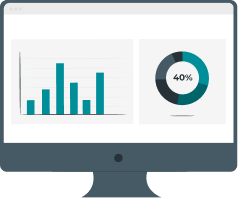
Need more data on the scheme?
View the dashboard of 2024 data reported by the scheme’s producer responsibility organisation, on all aspects from market placements to collection, treatment and financial data.
The dashboards are currently only available in French. We apologise for any inconvenience caused. You can find the list of publications we produce in English on the Publications page.
Everything you need to know about the scheme
The key issues for the medical sharps from self-treating patients EPR scheme are to:
- Prevent and avoid the health and environmental risks associated with this waste if it is handled by people in close contact with the patient, household waste collection and treatment personnel, or members of the public if it is discarded in household waste or as litter;
- Collect and recover infectious risk healthcare waste from self-treating patients safely in order to preserve the environment, because this type of waste is hazardous to the environment and human health if it is improperly disposed of.
- Recycle electronic healthcare waste in order to save natural resources.
Products concerned
According to the Public Health Code, medical sharps used by self-treating patients and users of self-test kits, including, as of 1 January 2021, electrical or electronic equipment associated with such devices. These are sharp, cutting or piercing materials or equipment produced by self-treating patients as part of a medical treatment or monitoring undertaken outside a healthcare facility and without the intervention of a healthcare professional.
For further information, see articles R.1335-8-1 to R.1335-8-7 of the Environmental Code.
Product families
The producer responsibility organisation DASTRI defines 14 product families.
Sharps waste comprises:
- Disposable lancets and lancing devices and lancet cylinders
- Pen needles
- Needles alone
- Micro-intravenous devices
- Transfer sets
- Catheters
- All-in-one catheters
- Pens with set or retractable needle
- Syringes with fixed needle
- Imijects
- Lancing devices for self-test kits
- Inserters without electrical and electronic equipment
Electronic healthcare waste comprises:
- Inserters with electrical and electronic equipment
- Pumps with electrical and electronic equipment
Diseases concerned
You can view the list of the 36 diseases covered by the ‘Medical sharps from self-treating patients’ EPR scheme on the website of the producer responsibility organisation DASTRI.
Sources : Order of 23 August 2011 in application of article R. 1335-8-1 of the Public Health Code, amended by the orders of 4 May 2016, 18 Decembre 2017 and 22 april 2022.
Are your products packaged ?
If so, you also come under the household packaging and graphic papers (EMPAP) scheme.
Do your products contain batteries ?
You may come under the batteries and accumulators (PA) scheme.
The producers concerned by the ‘Medical sharps from self-treating patients’ EPR scheme are: “the marketing authorisation holders (‘exploitants’) of medicines and the manufacturers of medical devices (or their authorised representative). Where the medical device is transferred under the brand or trade name of a reseller or an ordering party and this branding or trade name results from a contractual document, this reseller or ordering party shall be considered the producer”.
The producers concerned are defined in article R1335-8-1 of the Public Health Code.
1 producer responsibility organisation (PRO) is accredited for the current accreditation period
| Accredited PRO | Categories | Current accreditation period | EPR fees rate | |
|---|---|---|---|---|

|
Sharp and Electronic | 2023-01-01 – 2028-12-31 | Check the rates |
The producer responsibility organisation DASTRI has been accredited since 2012 for medical sharps from self-treating patients, and since 2022 for electric or electronic medical devices posing an infectious risk for self-treating patients. It was re-accredited at the end of 2022 for the period 2023-2028, to separately manage the collection and treatment of the two flows:
- Infectious risk healthcare waste from self-treating patients, also referred to as ‘sharps waste’.
- Electronic infectious risk waste from self-treating patients (DASRIe-PAT), also referred to as ‘electronic healthcare waste’.
For further information on this accreditation, see the order of 23 December 2022.
When a producer joins a producer responsibility organisation (PRO), it pays the organisation an EPR fee in return for the latter taking responsibility for its obligations relating to the products it places on the market.
This amount may be modulated upwards or downwards depending on the environmental characteristics of the products. A bonus rewards virtuous practices, while a penalty is applied to a product with characteristics that have a significant impact on the environment or human health.
Penalty
Applicable within the electronic medical devices EPR scheme in 2025
| Criterion | Condition | Bonus amount | Documentary proof |
|---|---|---|---|
| Recyclability | Presence of brominated flame retardants (BFRs) in the plastics used to make the product. Concerns medical sharps associated with an electrical or electronic equipment item. |
+15% of the EPR fee amount | Absence of BFRs justified by submitting the “Material Declaration” to the PRO. |
Producers, to find out whether this penalty applies to you, please contact your producer responsibility organisation. You can also consult the PRO’s schedule of penalties.
To date there are no bonuses in the standard and electronic healthcare waste EPR scheme.
Find out more about EPR fee modulation
The specifications set the following targets:
| 'DASRI-PAT' collection targets | 'DASRIe-PAT' collection targets (including electronic) |
'DASRIe-PAT' recycling targets (including electronic) |
||||
|---|---|---|---|---|---|---|
| 2023 | 2025 | 2023 | 2025 | 2028 | 2025 | 2028 |
| 82 % | 85 % | 50 % | 55 % | 60 % | 60 % | 70 % |
How are the rates calculated ?
The collection rate is calculated as the net quantity (by mass) of sharps waste collected (excluding the mass of the collection bins) during the year in question, relative to the average quantities (by mass) of medical sharps placed on the market over the previous two years.
The recycling rate is calculated as the quantity (by mass) of recycled materials obtained from treating electronic healthcare waste during the year in question, relative to the quantity (by mass) of such waste collected separately and treated during the same year.
- Latest accreditation of the DASTRI producer responsibility organisation : Order of 23 December 2022
- Specifications : order of 2 November 2022
- List of diseases resulting in the generation of sharps waste : Order of 22 April 2022
- Management of waste electrical and electronic equipment (WEEE) : Decree no. 2021-1176 of 10 September 2021
- Management of sharps waste : Decree no. 2011-763 of 28 June 2011
- Scope of the scheme : Articles R.1335-8-1 to R.1335-8-7 of the Public Health Code
- Legislation establishing the scheme : articles L541-10 to L541-10-17 of the Environmental Code
The producer responsibility organisation (PRO) for the DISP-MED scheme is DASTRI, a non-profit organisation governed by the French law of 1901, all of whose revenues are used for the purposes set out in the accreditation specifications.
The scheme is backed by all the actors along the chain:
- the manufacturers of medical devices and marketing authorisation holders (producers) of medicines, which contribute financially,
- the pharmacies, which distribute collection bins for infectious risk healthcare waste to self-treating patients and take back the bins filled with waste, all free of charge,
- the collection and treatment operators, which retrieve the infectious risk healthcare waste from the pharmacies and treat it (pre-treatment by disinfection or incineration).
Prevention
In terms of information and awareness-raising, the PRO produces communication resources, for pharmacies in particular, to inform patients of the importance of:
- returning their sharps waste and electronic healthcare waste in order, firstly, to avoid exposing the people responsible for collecting the waste to health risks (should this waste be disposed of in residual household waste or with recyclable packaging and papers), and secondly, to prevent the environmental and public health risks that arise if this waste is disposed of improperly;
- following the sorting instructions;
- returning their infectious risk healthcare waste to pharmacies free of charge.
Each year the PRO allocates at least 8% of the total amount of the financial contributions it receives to carrying out these information and awareness-raising activities.
The specifications for accreditation also stipulate that the PRO must conduct an experiment on the reuse of the collection bins.
According to article L. 541-10-12 of the AGEC Law, all producers are required to draw up and implement a prevention and ecodesign plan. The PRO DASTRI is consulting its members and is due to publish a public summary of the prevention and ecodesign actions undertaken by the actors in the scheme.
Collection
The collection of infectious risk healthcare waste is initiated by self-treating patients and users of self-test kits firstly by sorting it correctly (sharps waste in the yellow bin with the green lid, and electronic healthcare waste in the purple bin).
Pharmacies distribute the bins for collecting infectious risk healthcare waste to patients free of charge, and then retrieve them from the patients once they are full.
Operators retrieve this waste from the pharmacies and take it either to an incinerator accredited to treat infectious risk healthcare waste or to a pre-treatment centre (shredding and disinfection) in the case of sharps waste, or the disinfection, shredding and separation unit (DASTRI-Lab) for recycling, in the case of electronic healthcare waste
Traeatment
Sharps waste is intended to be disposed of (and is not recycled). Under the regulations, there are two potential treatment routes:
- Incineration in an incinerator accredited to treat infectious risk healthcare waste,
- pre-treatment (shredding and disinfection), followed by disposal: depending on the region, either through incineration in a waste-to-energy plant for non-hazardous waste, or through landfill at a non-hazardous waste storage facility.
Electronic healthcare waste is intended to be recycled. It is sent to the disinfection, shredding and separation unit (located in École-Valentin in the Doubs region of eastern France) where it is separated into 4 fractions that undergo different types of treatment:
- Printed circuit boards. Strategic materials (gold, rare earth elements, palladium, copper, etc.) are sent to the material recovery channels.
- Metals. These are recovered at a foundry or a steelworks.
- Batteries. These are sent to an accredited treatment operator (for recovery of the zinc and the iron and nickel alloys).
- Plastics. Work is underway with several companies to identify the best recycling solutions (in particular injecting recycled plastic into DASTRI’s yellow bins).
Brochure
Cross-sector study
Timeline
Decree on sharps waste management
2011
2011
Decree on sharps waste management
2012
Publication of the specifications
2012
Publication of the specifications
First accreditation of the DASTRI PRO
2013
2013
First accreditation of the DASTRI PRO
2017
Second accreditation of the DASTRI PRO
2017
Second accreditation of the DASTRI PRO
AGEC Law
2020
2020
AGEC Law
2022
Extension of accreditation to electronic healthcare waste
2022
Extension of accreditation to electronic healthcare waste
Third accreditation of the DASTRI PRO and start of electronic healthcare waste recycling in France
2023
2023
Third accreditation of the DASTRI PRO and start of electronic healthcare waste recycling in France
2023 - 2028
Accreditation valid